
No products in the cart.
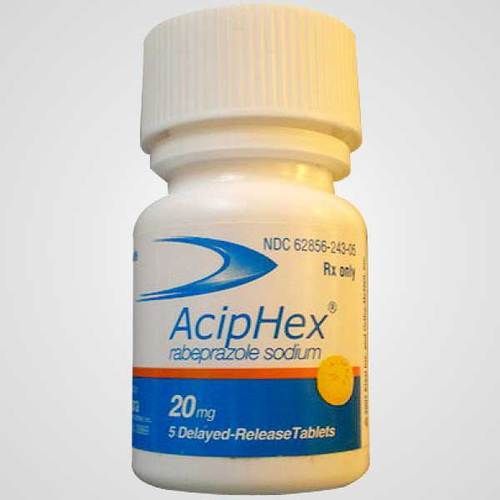
Aciphex 5mg
Our full-service online pharmacy packages and delivers your medication every month right to your door. Delivering prescriptions without stress and providing world-class pharmacy care 24 hours a day, 7 days a week. … URAC Accredited Mail Service Pharmacy.
$4.00
Aciphex 5mg – Uses, Benefits, Dosage, Side Effects & Safety Information
Aciphex is a brand name for rabeprazole sodium, a proton pump inhibitor (PPI) that decreases the amount of acid produced by the stomach. Rabeprazole is prescribed by doctors to treat acid-related digestive disorders including gastro-oesophageal reflux disease (GERD), erosive or ulcerative GERD and duodenal ulcers. It can also be used as part of combination therapy for Helicobacter pylori infection.
Important: The standard U.S. Aciphex delayed-release tablet is 20 mg, not 5 mg. Therefore, patients should check the exact product, manufacturer, and strength before taking an “Aciphex 5mg” product.
What does Aciphex do?
Aciphex contains rabeprazole sodium, which is a kind of proton pump inhibitor. It works by decreasing the production of stomach acid. So it may help relieve heartburn and help healing when too much stomach acid causes irritation or ulcers.
It is a delayed-release medicine so patients should take the tablet whole. Do not chew, crush or break the delayed-release tablet.
Aciphex Uses
Heartburn and GERD
Physicians frequently will prescribe rabeprazole for GERD symptoms and to heal erosive or ulcerative GERD. It can reduce the amount of acid so that the tissue can heal from irritation. The official label for several GERD indications recommends dosing of 20 mg once daily.
Duodenal Ulcers
Aciphex is also indicated for the short-term treatment of duodenal ulcers. Adults: The official label recommends 20 mg once a day after breakfast for up to 4 weeks.
H. H. pylori Infection
If indicated, Rabeprazole may be used in conjunction with antibiotics as part of the treatment of H. pylori infection. The official Aciphex regimen is rabeprazole with amoxicillin and clarithromycin. However, antibiotic resistance may affect the treatment options. The patient should follow the treatment prescribed by a clinician and should not self-medicate.
Excess Stomach Acid
Doctors may also prescribe rabeprazole for pathological hypersecretory conditions, such as Zollinger-Ellison syndrome. These conditions necessitate individualised medical supervision, as the required dose can vary significantly from standard GERD treatment.
How Aciphex Works
Aciphex works by blocking the gastric proton pump which is responsible for the final step in acid secretion. Thus, lower acid levels may lessen irritation and provide an opportunity for damaged tissues to heal.
But Aciphex doesn’t work like an instant antacid. Hence the patients should take it as per the treatment schedule prescribed and should not take extra tablets for immediate relief.
Aciphex Dose
The dose depends on the condition being treated. The official prescribing information for the standard Aciphex delayed-release tablet indicates that the dose is 20 mg for most adult uses. For instance , erosive or ulcerative GERD is generally treated with 20 mg once daily for 4-8 weeks , and symptomatic GERD may be treated with 20 mg once daily for up to four weeks .
Do not assume that a product labelled “Aciphex 5mg” is the same formulation, because 5 mg is not a standard U.S. Aciphex® delayed-release tablet strength. Check with the package and ask a chemist or doctor before use.
Most Common Side Effects
Rabeprazole Like all medicines rabeprazole can cause side effects. Adverse Reactions Reported adverse reactions include headache, diarrhoea, nausea, vomiting, abdominal pain, constipation, flatulence and other gastrointestinal symptoms.
Most mild symptoms will improve, but get advice if symptoms are severe or last longer than usual.
Important Safety Information
Important risks have been associated with long-term or inappropriate use of PPIs. Label warnings include acute tubulointerstitial nephritis, Clostridioides difficile-associated diarrhoea, bone fractures, vitamin B12 deficiency, low magnesium levels, severe skin reactions, and fundic gland polyps.
Patients should, therefore, use the lowest effective dose for the appropriate duration under medical guidance.
Who should be cautious with Aciphex?
Tell your healthcare professional about all the medicines you take before you start rabeprazole. This is especially important since Aciphex may interact with some other medications. Official prescribing information specifically recommends review of clinically important drug interactions.
Pregnant women or women who are breastfeeding should also check with their healthcare professional before using rabeprazole.
How to Use Aciphex
Take this medication as directed. Swallow extended-release tablets whole. Do not chew, crush, or split extended-release tablets. Depending on the condition, the medicine may be taken with or without food. Be sure to follow the directions that come with your prescription.
if you forget to take a dose, take it as soon as you remember. Do not take 2 doses at the same time unless told to do so.
Concluding Thoughts
Aciphex (rabeprazole) is a proton pump inhibitor used to treat a number of acid-related digestive conditions, the most common of which are GERD and duodenal ulcers. It reduces stomach acid and can help relieve symptoms and heal tissue.
However, don’t assume that Aciphex 5mg is a standard Aciphex tablet strength. The current U.S. labelling lists 20 mg delayed release tablets. Always verify the strength and formulation of the product before using it and follow the instructions of a qualified healthcare professional.
Reviews
There are no reviews yet.
Metoclopramide 10mg
$5.00

Florinef Acetate (Fludrocortisone) 0.1mg
Original price was: $5.00.$4.00Current price is: $4.00.
Ditropan XL 10mg
Original price was: $3.50.$2.89Current price is: $2.89.

Cytotec 200mcg
$5.00
Carafate 1gram
$5.00

Bentyl 10mg
$4.00


-
(0 customer reviews)